Flat Embroidery
A classic stitched finish for logos, lettering and everyday badges. Common uses include uniforms, jackets, caps and bags.

Custom embroidered patches made to your artwork, finished size and thread colours, supplied as separate patches for caps, jackets, uniforms and bags. Artwork is reviewed at its intended finished size before we quote.
MOQ50 pcs per design

Stitch styles
Each style below is a construction we actually produce. Stitch type, coverage and finished size are confirmed against your artwork before quoting, because they change how a logo reads at its real size.
A classic stitched finish for logos, lettering and everyday badges. Common uses include uniforms, jackets, caps and bags.
Foam-supported embroidery for raised elements. Suitable shapes, stitch structure and finished size need review; often considered for bold cap logos.
Thread covers the patch face for a dense stitched appearance. Coverage is a construction choice, not a separate guarantee of quality; confirm it with the artwork.
Reflective thread accents for decorative emblems and commemorative badges. Thread availability, stitch density and fine detail are evaluated for the project.
An artwork-led approach to finer lettering and closely spaced elements, not a universal precision specification. Readability is checked at actual size; changes or woven construction may be recommended.
An outline tailored to the artwork. Narrow sections, internal corners and complex contours are reviewed with the border and backing.
Manufacturing evidence
The photographs below were taken in the workshop where these patches are embroidered. Each caption states what that picture shows, and operations photographed separately are not one customer order.
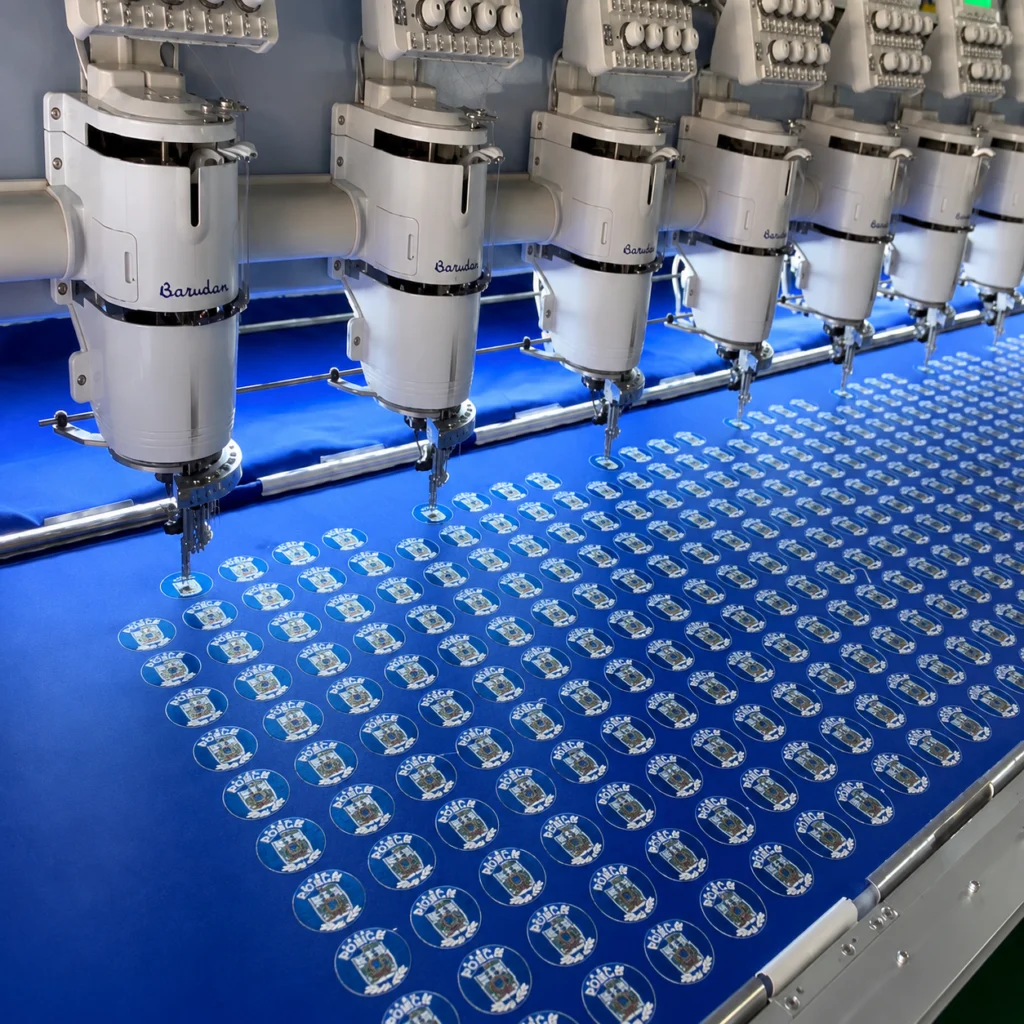
RAYSUN production photograph
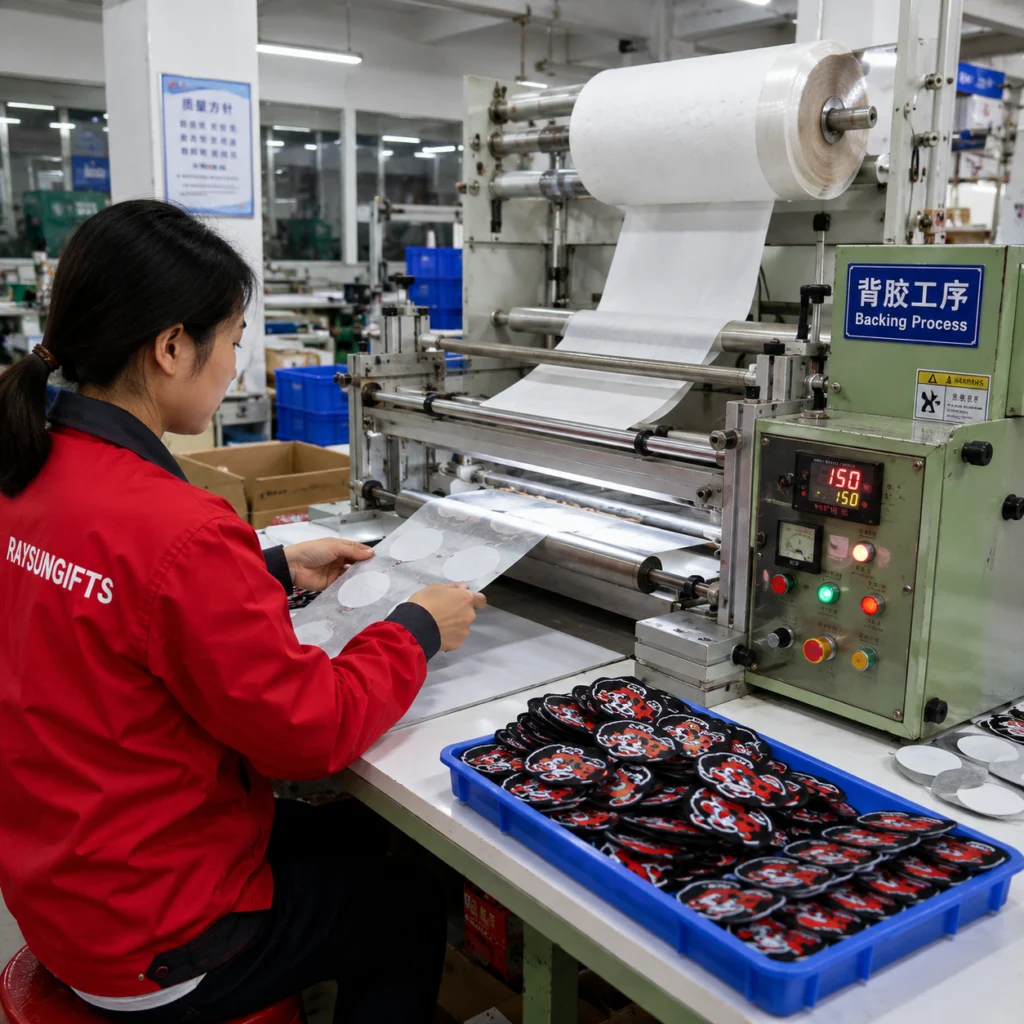
RAYSUN production photograph
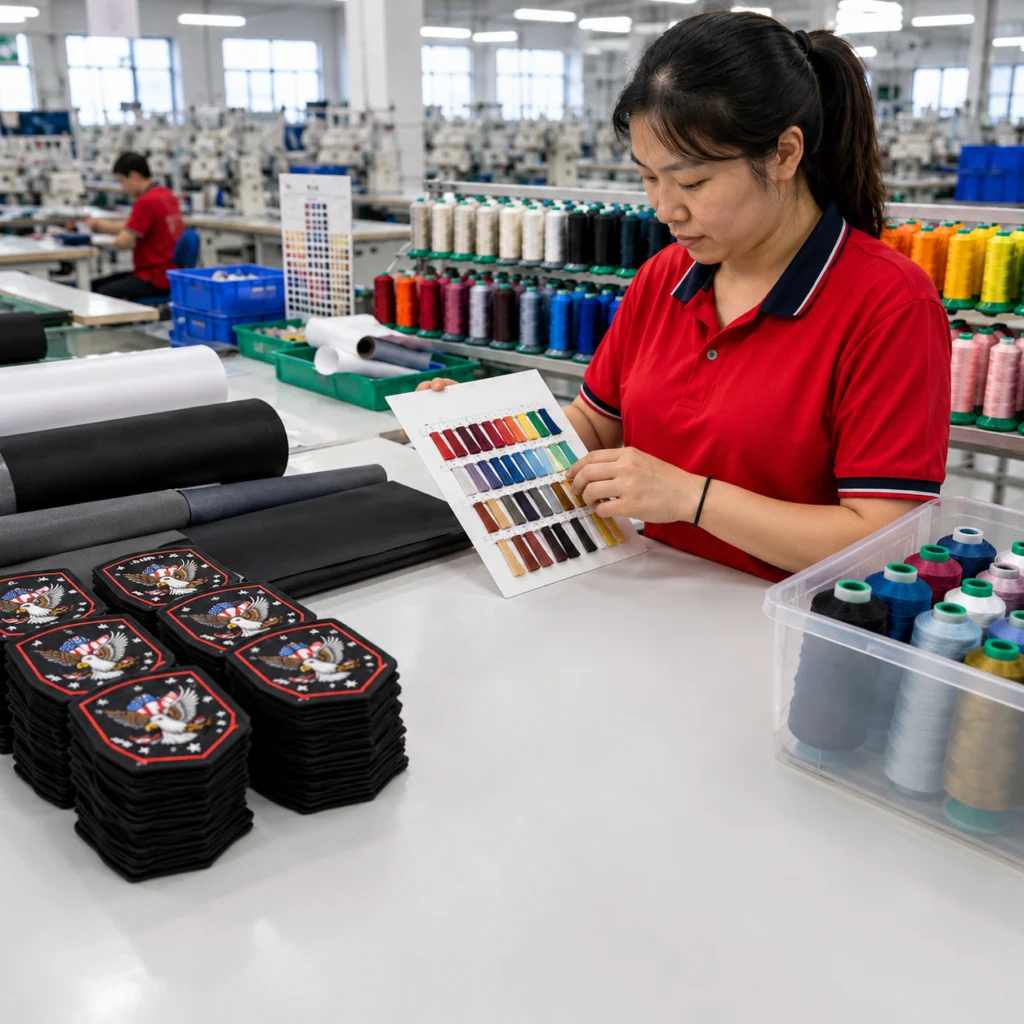
RAYSUN production photograph

RAYSUN photograph
Patches are mainly produced in-house. Special processes, materials or capacity requirements may involve outside partners; RAYSUN remains responsible to the customer for quality and delivery. The photographs show existing colour-check, embroidery and backing operations; they are not consecutive stages of one customer order.
Quality control
Inspection happens at fixed points in production rather than once at the end. The steps below run in the order shown, and each one states what is checked and against what.
Artwork, finished size, lettering and construction are reviewed for feasibility before anything is stitched.
A sample confirms stitch, colour and structure against the approved artwork.
Stitching is checked during production rather than only at the end of the run.
The edge finish and the backing are checked against the approved specification.
Appearance, dimensions, quantity and packing are checked against the approved reference.
The bulk run is compared with the approved sample so the order stays consistent from the first piece to the last.
Detail & stitch density
Detail is limited by patch size, thread and construction. Where a project has both the artwork and the finished patch photographed, the pair is published here side by side.
Very fine text and tightly spaced detail can close up at small sizes. We check the smallest readable element against your artwork at the finished size before quoting, and may suggest a larger patch or a woven construction where the detail would not survive. Detail depends on finished size, thread and construction, so not every detail seen on screen reproduces exactly.
Coverage & base fabric
Coverage is how much of the surface the stitching fills. Low coverage leaves the base fabric visible for a lighter face; high coverage fills the patch face. Each level is photographed on its base fabric once that sample is available.
Partial stitching leaves the base fabric visible behind the design, for a lighter, more textured face.
A mix of stitched and open areas, where the design allows the base fabric to show through.
Thread covers the patch face for a dense, even stitched appearance where the artwork needs it.
Coverage is a construction choice, not a quality grade. Thickness and softness also depend on the base fabric, thread, stitch density and structure, so higher coverage alone does not make a patch harder.
Certificates & reports
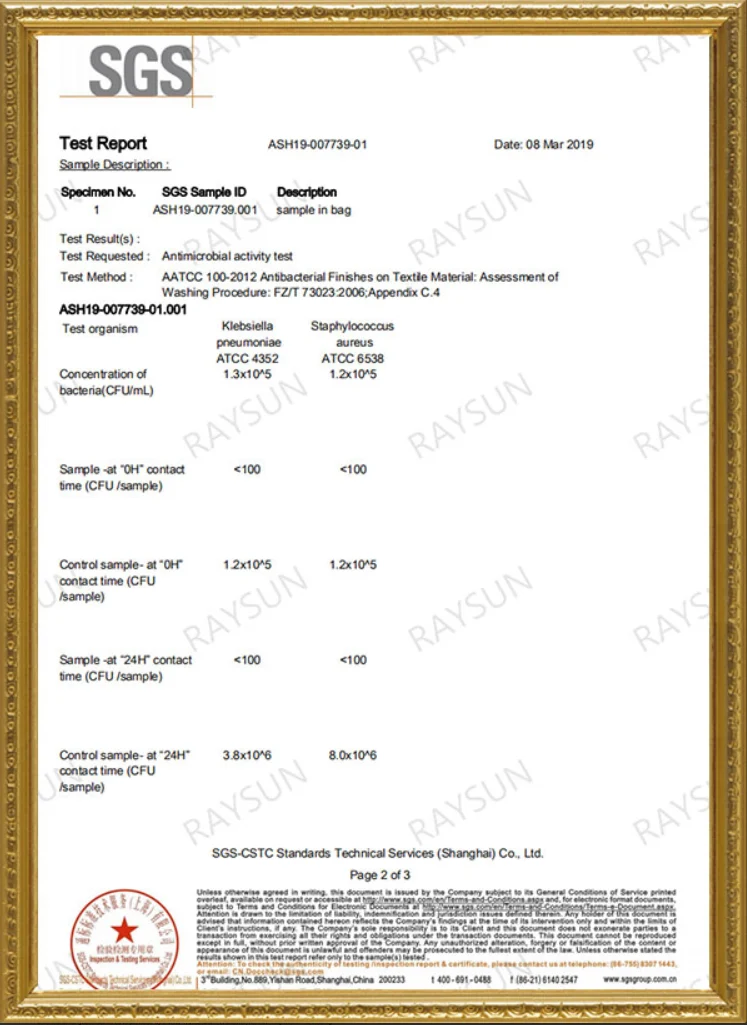
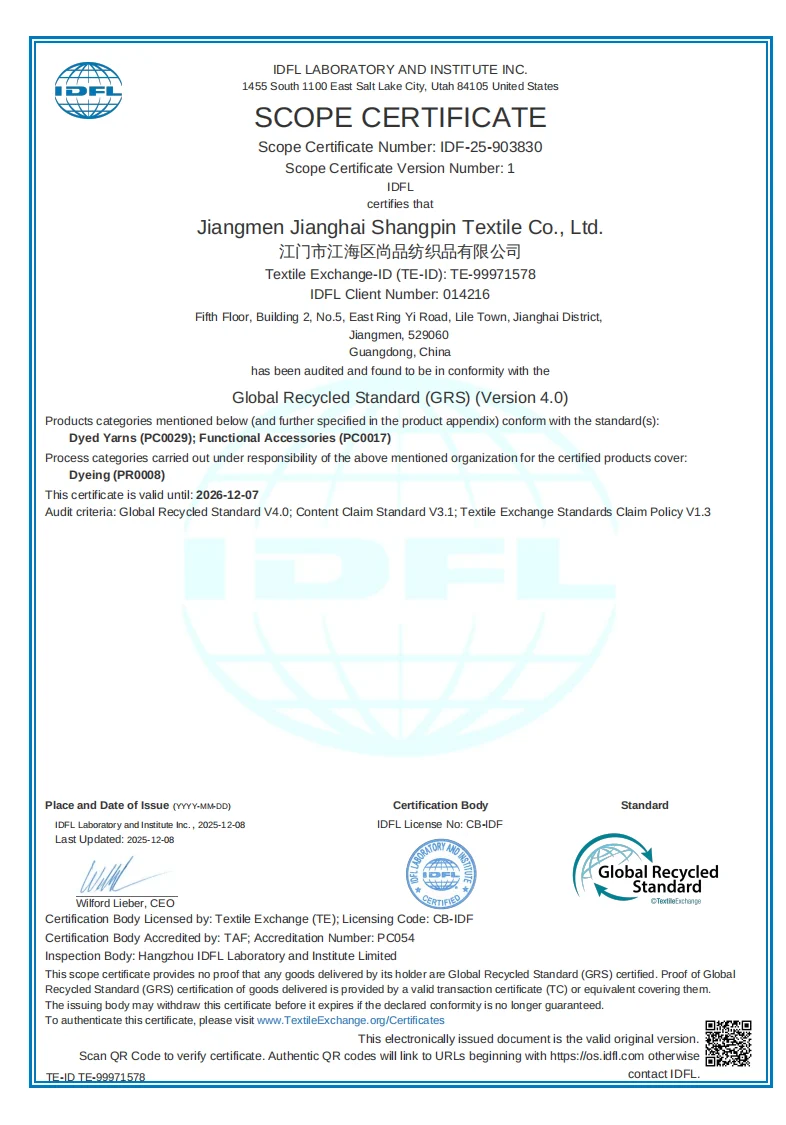

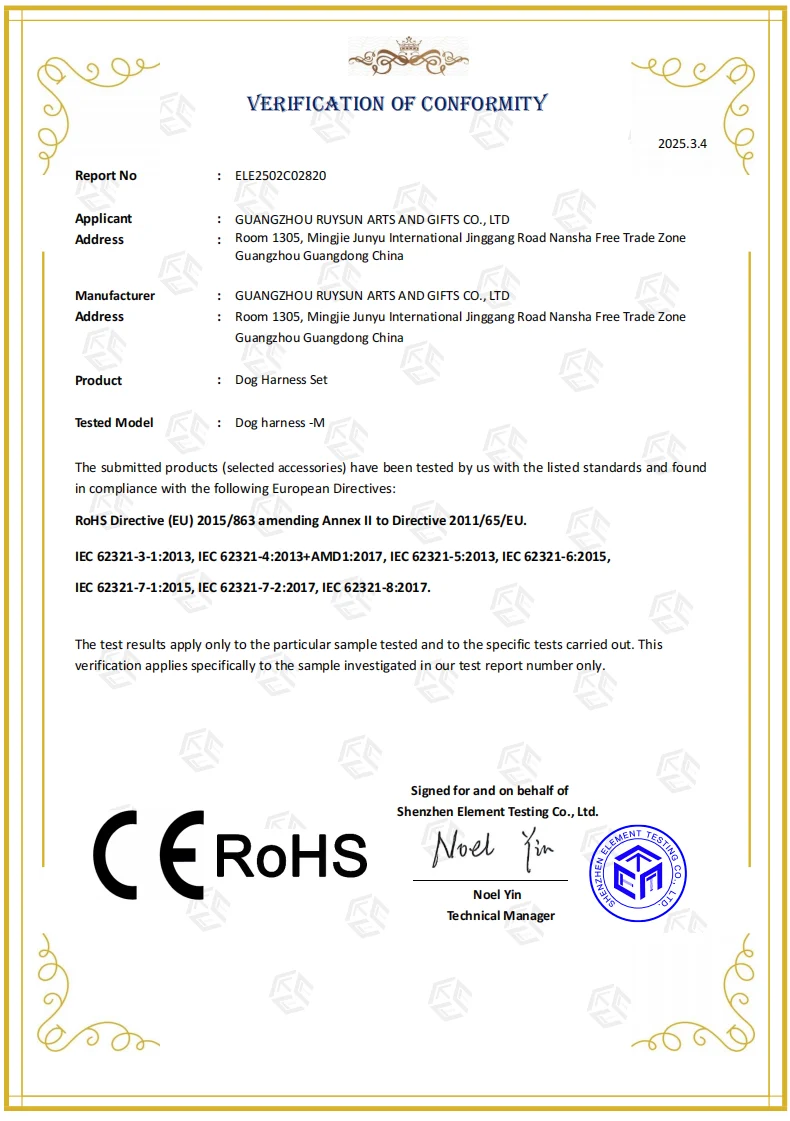
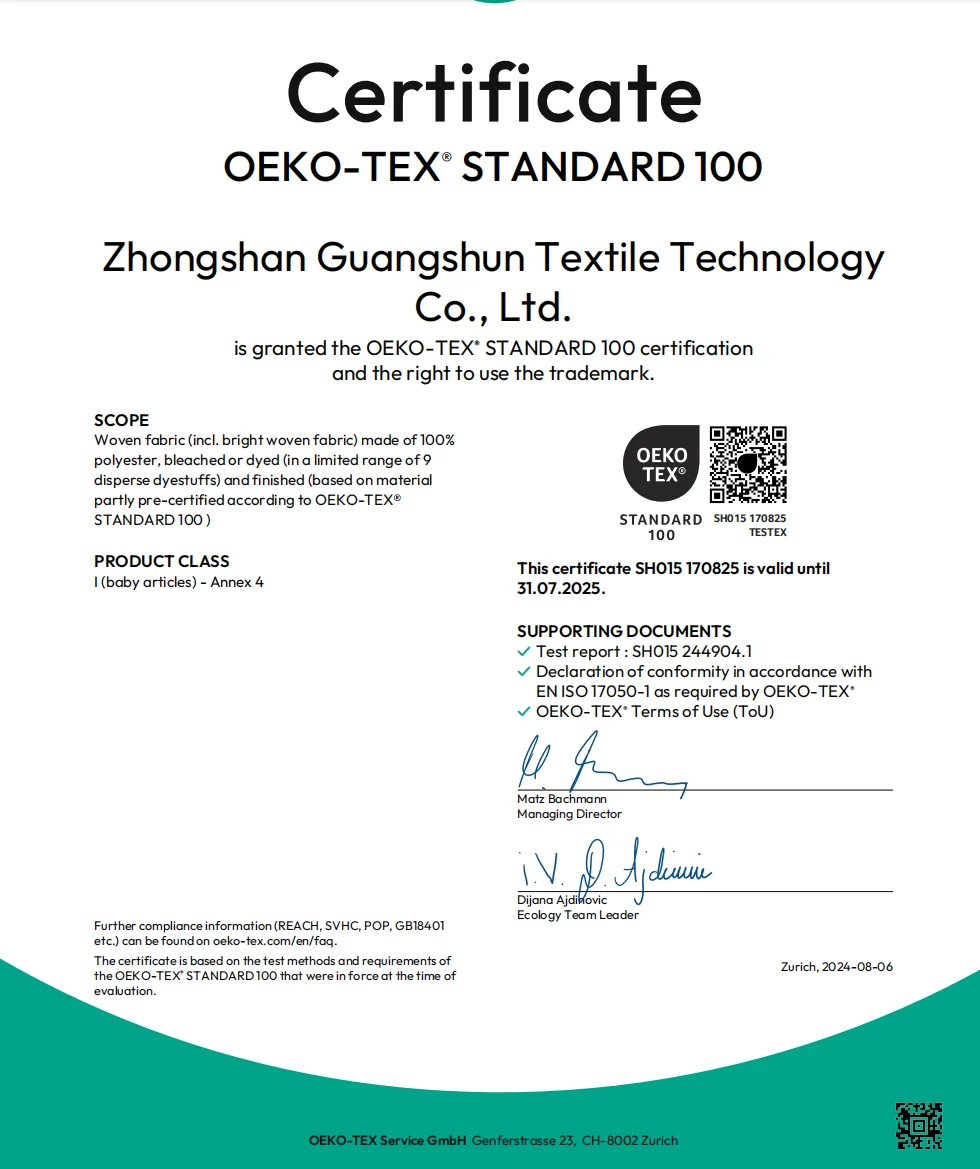
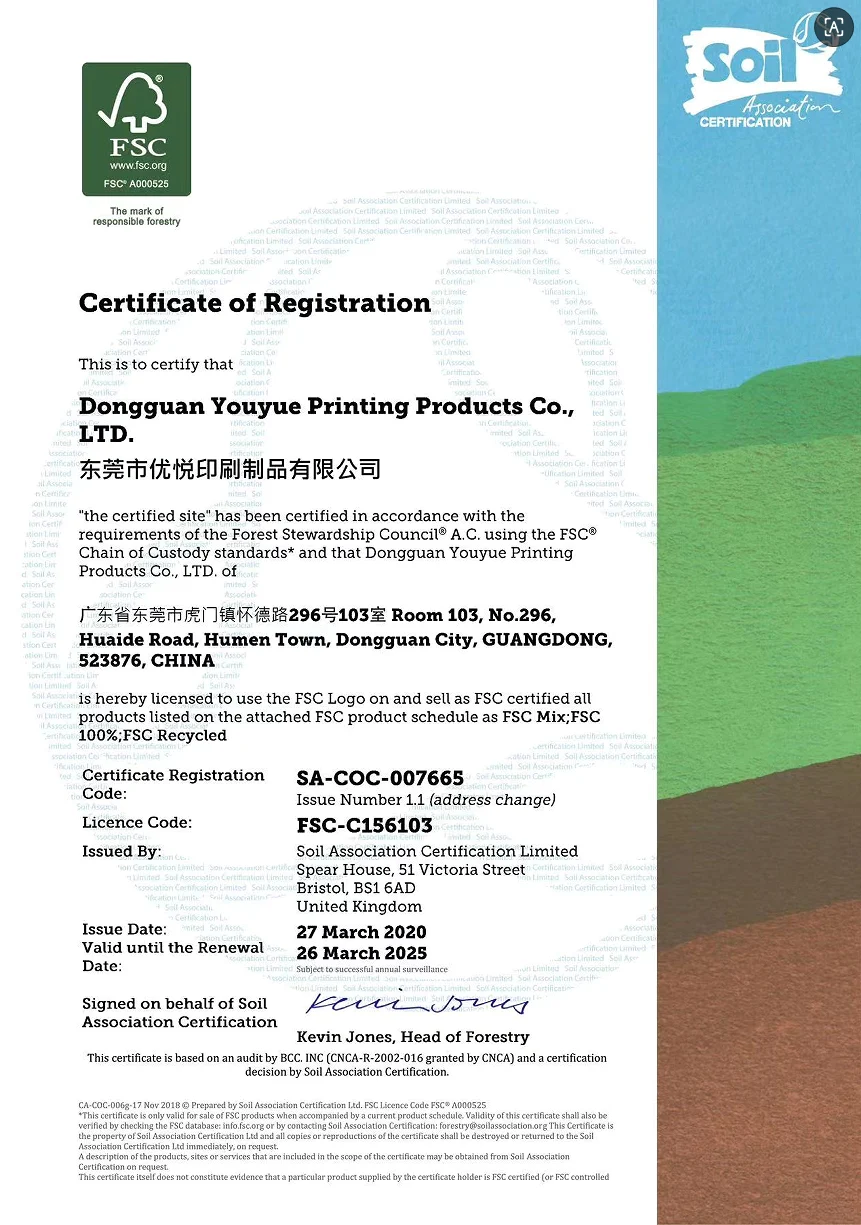
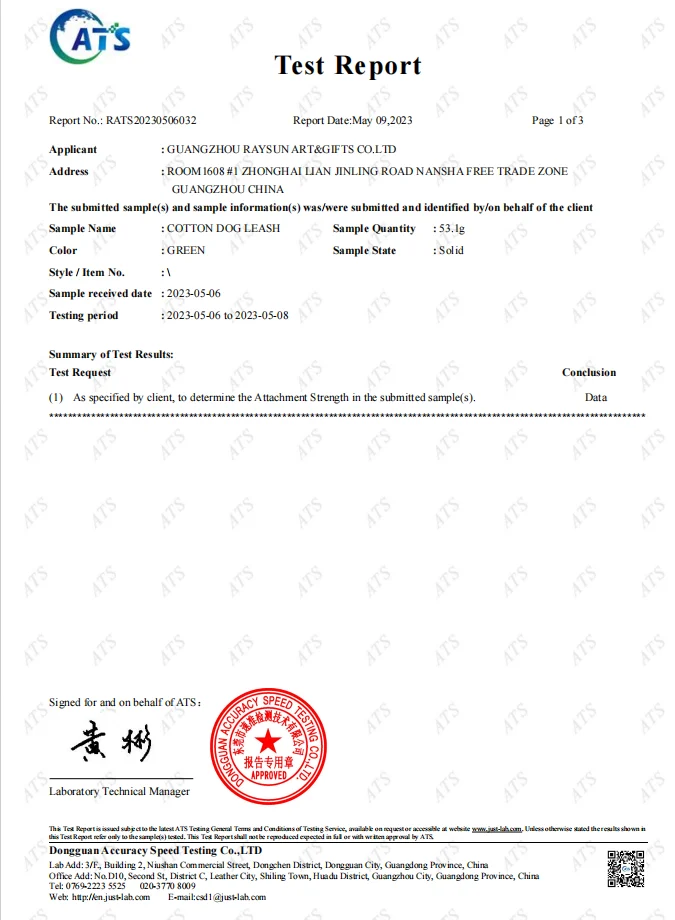
Edge finishing
The edge decides how the badge sits against fabric and how sharp an outline can be. Where a finish has front, back and macro photographs, each is shown separately rather than cropped into one picture.
A wrapped, raised edge for a traditional badge finish. Simple outlines often suit this construction; tight internal corners may need another treatment.
A closely cut outline for custom shapes. Check the material, contour and edge appearance during artwork review or sampling.
An embroidered border following the outline. Border width and stitch treatment are confirmed with the production artwork.
Backing options
Backing is chosen for the surface the patch goes on and for who installs it. Heat-activated backing is not automatically suitable for coated, waterproof or heat-sensitive fabric: we confirm the method and test it on the actual material.
Permanent attachment by stitching. Confirm fabric compatibility and the installation method with the garment or accessory maker.
Heat-activated backing. Temperature, time, pressure and fabric compatibility require confirmation; test on the actual material.
For removable or interchangeable patches. Confirm whether a matching loop piece is needed and how it will be installed.
Suitability depends on the surface and the intended duration. Do not assume permanent or washable performance.
Size & shape
Size is quoted in millimetres or inches across the finished edge, measured against the actual cap, garment or bag. A larger patch holds more detail; a smaller one needs the artwork simplified.
A circular outline for a single emblem; the finished size is set from the installation area.
Straight edges hold block lettering and balanced logos.
A wide outline for name bars and horizontal logos.
A softened outline for emblems and titles that need more width than height.
A shaped outline for club, school and uniform emblems; internal corners are reviewed together with the border.
An outline traced from your artwork. Narrow sections and tight contours are reviewed with the edge finish.
Size is quoted across the finished edge and checked against the actual installation area. Minimum and maximum sizes are published only once production has confirmed them for the construction, so ask for a size review together with your artwork.
Thread colour
Thread is matched to a physical reference rather than to a screen. A Pantone number narrows the search to the nearest thread we can supply; for a critical colour we agree a physical swatch and an acceptable variation before production.
Pantone is used as a matching reference, not a guarantee of an exact match to a paper card, and a screen RGB value does not represent the thread colour. For critical colours we agree a physical reference and an acceptable variation before production.
Applications
A patch is chosen alongside the item it goes on: position, finished size, edge and backing follow from the garment or bag rather than from the artwork alone.
Front panels and side placement. The curve of the cap limits the usable area, so the artwork is checked against the panel before sizing.
Chest, sleeve and back placement. Heat-seal or sewing is chosen together with the garment maker.
Front panels and lid placement. On coated or heat-sensitive fabric the attachment method is checked on the material itself.
Repeatable emblems across sizes and batches, with one approved reference held for reorders.
Small runs of event badges and souvenir patches, often with several designs in one order.
By industry
Buying habits differ by sector: a uniform programme, a promotional order and a resale line do not ask for the same construction. Each entry below pairs typical needs with the build we would propose for them.
Key focus
Design-led badges that carry a brand mark, often in several colourways.
Full-coverage embroidery or metallic accents, with the smallest lettering reviewed at finished size.
Key focus
Consistent emblems across sizes, batches and reorders.
Merrow border with sew-on backing, held against one approved sample.
Key focus
Event and gift badges, usually several designs in one order.
Flat embroidery with hook-and-loop or iron-on backing for fast distribution.
Brief introduction
Badges for packs, bags and outerwear, where the item is used hard.
Coverage and edge chosen with the abrasion the item sees in use.
Brief introduction
Structure and function come before decoration.
Shaped construction and removable attachment, confirmed against the unit's specification.
Buying questions
These are the questions that come up before an order is placed. If yours is not here, ask it with your quote request and we will answer it directly.
Start your quote
Artwork is reviewed at its intended finished size before we quote, so the reply covers the construction that will actually work rather than a price per patch. Vector artwork helps; a clear photo or sketch is enough to start.
MOQ50 pcs per design